

What is the Cost of an Ecommerce Website? A Complete Guide for Businesses in 2026 Introduction What is the Cost of an Ecommerce
What is the Cost of an Ecommerce Website?
- Home
- What is the Cost of an Ecommerce Website?
Uncategorized
 By dinesh
July 08, 2026
By dinesh
July 08, 2026
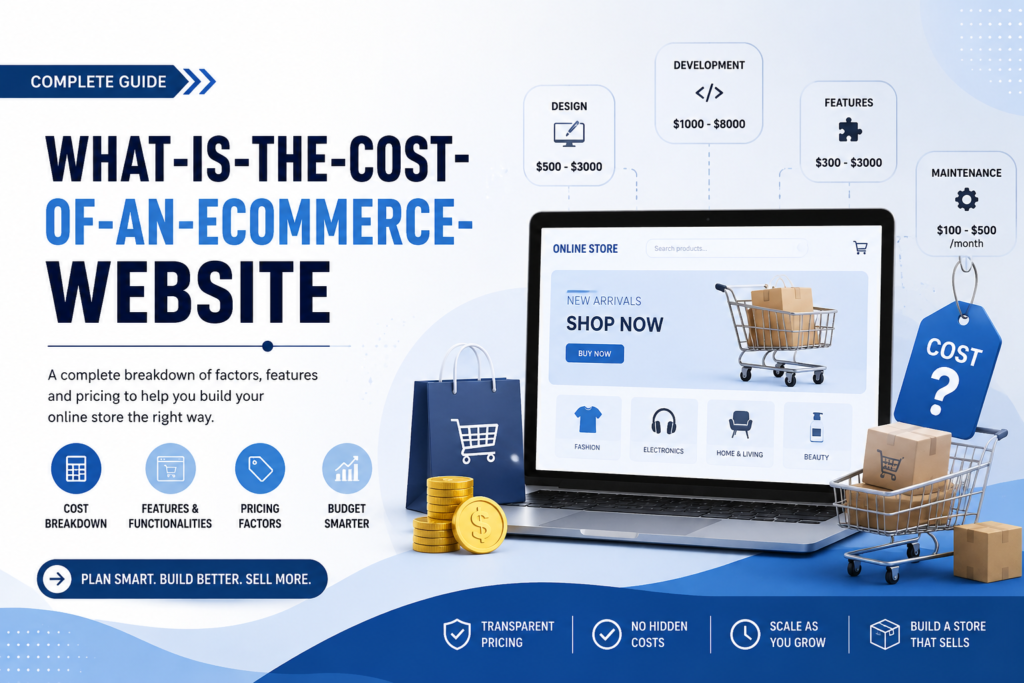
What is the Cost of an Ecommerce Website?
By dinesh
July 08, 2026
What is the Cost of an Ecommerce Website? A Complete Guide for Businesses in 2026
Introduction
What is the Cost of an Ecommerce Website? In today’s digital-first world, having an ecommerce website is no longer a luxury—it’s a necessity. Whether you’re a startup launching your first online store or an established business expanding into online sales, one of the first questions you’ll ask is:
“How much does an ecommerce website cost?”
The answer isn’t as straightforward as quoting a single price. Ecommerce website development costs vary depending on the size of your business, the features you need, the technology used, and whether you choose a template-based solution or a fully customized platform.
This comprehensive guide explains every factor that influences ecommerce website pricing, helping you understand what you’re paying for and how to make the best investment for your business.
Why Every Business Needs an Ecommerce Website
Consumer buying habits have changed dramatically over the last decade. Customers now expect businesses to provide a seamless online shopping experience where they can browse products, compare prices, make secure payments, and receive doorstep delivery.
An ecommerce website enables businesses to:
Sell products 24/7
Reach customers worldwide
Reduce dependency on physical stores
Increase revenue opportunities
Build brand credibility
Improve customer convenience
Automate order management
Instead of relying solely on marketplaces, owning your ecommerce website gives you complete control over your business, branding, pricing, and customer relationships.
Average Ecommerce Website Cost
The total investment depends on the complexity of your project.
Basic Ecommerce Website
Ideal for:
Small businesses
Local retailers
Boutique stores
Home businesses
Typical features include:
Product catalog
Shopping cart
Secure checkout
Payment gateway integration
Mobile responsiveness
Contact page
Basic SEO
Estimated Cost:
₹20,000 – ₹50,000
Standard Ecommerce Website
Suitable for:
Growing businesses
Fashion brands
Electronics stores
Lifestyle businesses
Includes:
Unlimited products
Product filters
Wishlist
Customer accounts
Coupon system
Inventory management
Shipping integration
Blog
Advanced SEO
Estimated Cost:
₹50,000 – ₹1,20,000
Advanced Ecommerce Website
Designed for businesses with higher sales volume.
Features include:
Custom design
Multi-vendor capability
ERP integration
CRM integration
Warehouse management
Multiple payment gateways
Loyalty programs
Advanced analytics
Marketing automation
Mobile app integration
Estimated Cost:
₹1,50,000 – ₹10,00,000+
Factors That Affect Ecommerce Website Cost
1. Website Design
The visual appearance of your online store greatly impacts customer trust and conversions.
Template Design
A pre-designed theme customized to match your brand.
Advantages:
Affordable
Faster delivery
Mobile-friendly
Professional appearance
Lower development cost.
Custom Design
Designed entirely from scratch.
Advantages:
Unique branding
Better user experience
Higher conversion potential
Complete flexibility
Requires more design and development time.
2. Number of Products
The number of products significantly affects pricing.
For example:
20 products require minimal setup.
500 products need organized categories.
5,000 products require advanced inventory management.
Large catalogs often require bulk upload tools and database optimization.
3. Ecommerce Platform
The platform you choose influences both initial and long-term costs.
Popular options include:
WooCommerce
Shopify
Magento
OpenCart
Custom Laravel
React-based ecommerce applications
Each platform has different licensing, hosting, maintenance, and scalability requirements.
4. Payment Gateway Integration
Customers expect secure online payments.
Common payment methods include:
Credit cards
Debit cards
UPI
Net banking
Wallet payments
EMI options
Payment gateway providers may charge:
Setup fee
Annual fee
Transaction fee
Development charges are separate from payment processing charges.
5. Shipping Integration
Shipping plays a vital role in ecommerce.
Integrations may include:
Automatic shipping rates
Courier tracking
Delivery updates
Label printing
Order synchronization
Popular courier integrations improve customer satisfaction but add development effort.
6. Inventory Management
Inventory systems help businesses manage:
Stock availability
Product variants
Warehouse inventory
Low-stock alerts
Purchase orders
Advanced inventory systems require additional customization.
7. Product Variations
Selling products with multiple options increases development complexity.
Examples:
Size
Color
Material
Weight
Storage capacity
Each variation must be managed separately within the inventory system.
8. Customer Features
Modern ecommerce websites often include:
Customer login
Order history
Wishlist
Product reviews
Reward points
Saved addresses
Reorder functionality
More customer-focused features generally increase development costs but improve retention.
9. SEO Optimization
A beautiful website alone isn’t enough. Customers need to find your store through search engines.
Professional ecommerce SEO includes:
Optimized URLs
Meta titles
Meta descriptions
Product schema
XML sitemap
Fast page loading
Image optimization
Internal linking
SEO-friendly development provides long-term organic traffic.
10. Mobile Optimization
Over 70% of ecommerce traffic now comes from smartphones.
A responsive website should:
Load quickly
Display correctly on all devices
Offer easy navigation
Simplify checkout
Mobile optimization is essential for improving conversions and search engine rankings.
Hidden Costs to Consider
Many business owners focus only on development costs and overlook ongoing expenses.
Common recurring costs include:
Domain renewal
Web hosting
SSL certificate
Website maintenance
Security updates
Plugin licenses
Email hosting
Backup services
Marketing campaigns
Planning for these recurring expenses helps avoid unexpected costs later.
Should You Choose a Cheap Ecommerce Website?
While budget-friendly solutions can be attractive, the cheapest option isn’t always the best value.
Low-cost websites may suffer from:
Slow loading speed
Poor design
Weak security
Limited scalability
Outdated technology
Lack of technical support
Investing in a professionally built ecommerce website often results in better performance, higher customer trust, and increased sales over time.
How to Reduce Ecommerce Website Development Costs
You can manage your budget effectively by following these strategies:
Start with essential features and expand later.
Use a reliable content management system.
Choose scalable hosting.
Organize product information before development begins.
Invest in quality images and descriptions.
Prioritize user experience over unnecessary features.
Select experienced developers who understand ecommerce best practices.
A phased approach allows your online store to grow alongside your business.
Choosing the Right Ecommerce Development Partner
When selecting a development company or freelancer, consider:
Experience with ecommerce projects
Portfolio of previous work
Knowledge of SEO
Mobile-first design approach
Security best practices
Transparent pricing
Post-launch support
Maintenance services
Client reviews and testimonials
A reliable partner can guide you through planning, development, launch, and ongoing improvements.
Is an Ecommerce Website Worth the Investment?
Absolutely. An ecommerce website is more than just an online catalog—it’s a long-term business asset. It enables you to connect with customers beyond geographical boundaries, streamline operations, and build a recognizable brand.
While the initial cost depends on your goals and requirements, a well-designed ecommerce website can deliver significant returns through increased sales, improved customer engagement, and reduced operational overhead.
By understanding the factors that influence pricing and planning your investment carefully, you can build an online store that meets your current needs while remaining scalable for future growth.
Frequently Asked Questions (FAQs)
1. What is the average cost of an ecommerce website in India?
A basic ecommerce website generally starts around ₹20,000, while feature-rich and customized solutions can range from ₹50,000 to several lakhs depending on functionality.
2. How long does it take to build an ecommerce website?
A basic online store may take 2–4 weeks, while a custom ecommerce platform can take anywhere from 2–6 months based on complexity.
3. Which platform is best for a small ecommerce business?
WooCommerce and Shopify are popular choices for small businesses due to their ease of use, flexibility, and wide range of integrations.
4. Does ecommerce website cost include hosting and domain?
Not always. Some developers include hosting and domain registration in their packages, while others charge these separately. Always confirm what’s included in the proposal.
5. Can I upgrade my ecommerce website later?
Yes. A professionally developed ecommerce website should be scalable, allowing you to add features such as advanced analytics, loyalty programs, mobile apps, or multi-vendor functionality as your business grows.
Category
- Business(1)
- Corporate(1)
- IT Solutions(1)
- Logo Design(1)
- Marketing(1)
- Social Media Post(6)
- Social Media Video(6)
- Technology(1)
- Uncategorized(12)
- Website design(4)
Recent posts
Website Maintenance in Keelkattalai
October 22, 2026Website Development Near Pallikaranai
October 21, 2026Website Developer in Keelkattalai
October 16, 2026Tags
Affordable Website Development in Keelkattalai
Affordable Website Maintenance Chennai
BestWebDesignCompany
Best Website Developer in Keelkattalai
Best Website Maintenance Services in Keelkattalai
Business Website Developer in Keelkattalai
ChennaiBusiness
Custom Website Development in Keelkattalai
DigitalMarketingChennai
EcommerceWebsiteDevelopment
Ecommerce Website Development in Keelkattalai
Freelance Website Developer in Keelkattalai
Madipakkam
Medavakkam
PallikaranaiChennai
Perumbakkam
Professional Web Designer in Keelkattalai
ProfessionalWebsiteDesign
Professional Website Support Keelkattalai.
ResponsiveWebDesign
Responsive Website Design in Keelkattalai
SEO Friendly Website Development in Keelkattalai
SmallBusinessWebsite
Velachery
Web Design and Launch
Web Design Company Chennai
WebDesignNearMe
Web Design Services in Keelkattalai
WebDevelopmentChennai
Web Development Services in Chennai
Website Designer Near Keelkattalai
website designing
Website Designing Company in Keelkattalai
website development
Website Development Company in Chennai
Website Development Company in South Chennai
WebsiteDevelopmentNearMe
Website Maintenance Company Near Keelkattalai
Website Maintenance in Keelkattalai
Website Maintenance Services in Keelkattalai
Website Redesign Services in Keelkattalai
Website Security Services Chennai
WordPress Developer in Keelkattalai
WordPressDevelopment
WordPress Maintenance Keelkattalai